
December 11, 2025
In the past few weeks, Annapolis residents have been flooded with messages celebrating the supposed “environmental responsibility” of the Providence Point development and the permanent protection of 123 acres at Mas Que Farm. The City, the developer, and some local commentators now present this moment as a victory — a balanced compromise between conservation and growth.
But the truth is far more painful, and far more important.
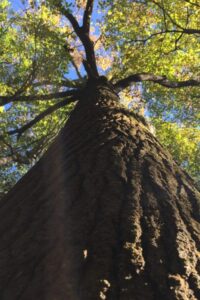
A Forest Was Lost — And No One Should Pretend Otherwise
At the heart of the Providence Point site stood nearly 30 acres of mature, interior Priority Forest, legally recognized as the most ecologically valuable land for water quality and wildlife. Alongside it stood 64 Significant Trees, many more than a century old.
These trees filtered stormwater before it reached Crab Creek, cooled our summers, stored carbon, and sheltered wildlife that has already begun to disappear. These services cannot be replaced with pipes, basins, or concrete vaults — no matter how many times they are called “innovative” or “engineered to mimic a forest.”
A mature forest does not need a $500,000 restoration fund or a 25-year stormwater model.
A mature forest already performs these functions perfectly, every single day.
No Monitoring Program Can Undo Clearcutting
Recent messaging has touted the hiring of an “Independent Environmental Monitor” as proof that the development represents environmental stewardship. But oversight of destruction does not transform destruction into protection. You cannot monitor a forest back into existence once it has been cut.
The Mas Que Farm Conservation Easement Is Not a Replacement
Yes — the protection of 123 acres at Mas Que Farm is a meaningful conservation achievement. But it is also being used to distract from, and justify, the loss at Crystal Spring.
These two landscapes are not interchangeable:
- The forest that was destroyed at Providence Point will not be standing again in our lifetime.
- Newly planted saplings cannot replace the ecological function of a mature forest.
- Acreage totals alone mean nothing without looking at quality, contiguity, and hydrological function.
The public deserves to understand that the Mas Que Farm easement does not offset the loss of Crystal Spring’s Priority Forest in any scientific or ecological sense.
We cannot “trade” one forest for another like interchangeable units on a planning map.
Rewriting the Narrative Doesn’t Change the Reality
Some communications have gone so far as to thank the developer for “cooperation” and label citizen appeals as unnecessary delays. In truth, it was citizens — not institutions — who stood for nearly twenty years to protect this forest. Citizens who exposed legal errors, who demanded real environmental review, who refused to accept that the destruction of a riparian forest was inevitable.
If anything deserves gratitude, it is the perseverance of those who defended the forest when others were silent or complicit.
What Annapolis Has Lost Is Irreplaceable
Crab Creek has lost one of its greatest natural defenders.
Annapolis has lost a living forest that survived for generations.
The Chesapeake Bay has lost a buffer that filtered pollution, absorbed stormwater, and nourished wildlife.
And we have lost the chance to show that our city could choose environmental integrity over developer pressure.
But This Is Not the End of the Story
Crab Creek Conservancy will continue to protect what remains — monitoring runoff, advocating for the watershed, documenting the impacts, and standing up for the Bay.
If you want the truth — and want to help preserve what is left — please visit:
Your support matters.